OUR PODCAST
What's in This Episode
You know the saying – “From little things, big things grow” – well, it is no different in the business world. In fact, some of the biggest businesses have quite literally started from a backyard shed. The latest trends for achieving work life balance sees so many people start a business from home. This can lead to success and struggles and can effect everyone, from tradies in business to customer service and of course creative entrepreneurs.
And so, in this new Instagram age where perfection is relentlessly pursued, do you ‘fess up’ to your humble beginnings? Or just “fake it till you make it”? And in all honesty, does anyone even care?
Why this episode is such an important listen.
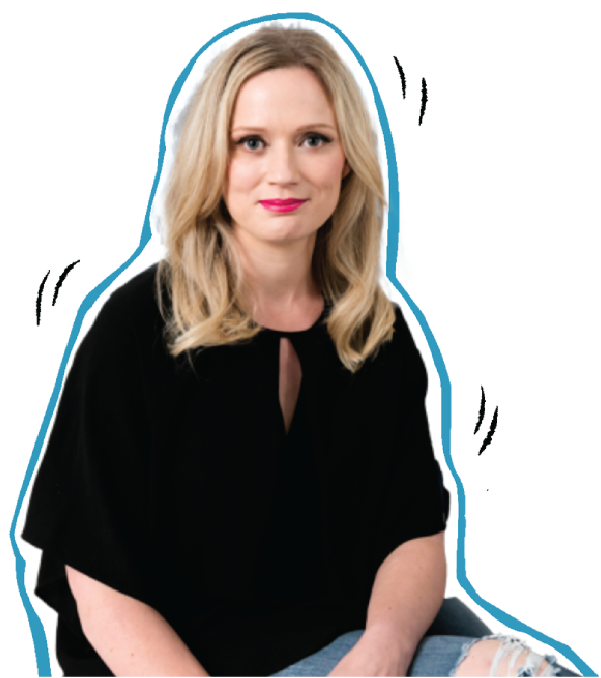
In this episode of the Commical weekly podcast, we chat to Jen Bishop, founder and publisher of the hugely successful (and run-from-home) blog Interiors Addict. She takes us through her career success stories from her humble beginnings through to her business experiences starting up the Interiors Addict blog.
Jen is refreshingly open and unashamedly proud of being a home-based ‘lady startup’ business. She takes a more honest approach to running her small business. She believes that authenticity always trumps forgery. To her, there is nothing more cringeworthy than seeing any small business owners, especially someone you know is lying, trying to pass off a co-working space as their very own plush office!
Is there really a need to appear bigger than you are? Do prospective clients really expect a smoke and mirrors show to prove legitimacy? Jen says that from her experience it has always been much more important to be professional and be good at what you do, than to have a big city address. It is far better to invest your time and money into your online business presence and any additional spending for credible contractors to help grow your business in a real and reputable way.
The fact is there are always going to be those clients out there that want or need that “Big Business” feeling. They might prefer to have more than one point of contact – or a need to impress their own clients with high rise meeting rooms and sweeping city views. But at the end of the day, if you are consistently delivering good work and meeting deadlines, your professionalism will leave more of an impression than a fancy harbour view ever will.
Commical – Episode title: One of the small business podcasts Australia needs to hear
Published 07/04/2020 on Chasing Albert website, spotify and apple podcasts.
Marie 00:00
I mean, think about it, right? Think about successful people. Don’t they all have a story about how, when they started out, they started from a garage? They’ll tell you that story, but they only tell that story when they’re rich and they have an office with a view, right? Because, when you think about it, have you ever seen somebody who’s just started a business share a photo of themselves sitting on a broken IKEA desk that’s wedged between the toolbox and their dad’s Ford?
Marie 00:41
No one shares that, though. I get it. I started my first business in the year 2006
Marie 00:48
out of my parents’ house in Bankstown, and I was embarrassed. The only thing I ever shared about my business was the PO Box, which was in Surry Hills.
Marie 01:08
There was a time when new business or small business owners would be coy about their office location, just like I was, and it still happens today. When interior design blogger Jen Bishop started her business, Interiors Addict, she was determined to do things differently. She shares with us today why she was determined to always be open and authentic, and why your office location really doesn’t matter.
Marie 01:35
Welcome, Jen.
Guest 01:36
Hi.
Marie 01:37
Nice to have you.
Guest 01:38
Thanks for having me.
Marie 01:39
How are you coping? How are you coping in these corona-crazy times?
Guest 01:43
Oh, hanging in there. I mean, as a work-from-homer for many years, this is not hugely different to me. But yeah, having my husband also work from home is a slight inconvenience.
Guest 01:58
It’s starting to get a little crowded.
Marie 02:00
In the office?
Guest 02:01
Yeah, and a couple of kids there all the time. But, apart from that, fine. We’re getting through it like everyone else. Good on you. How are you coping?
Marie 02:12
Not so well, if I’m to be completely honest. I work from home, but my home office is detached from the home, so I actually have an office to myself.
Marie 02:23
But that’s being renovated at the moment, actually, and that’s now on hold. So, with the kids home and my husband home, I’m working from the kitchen bench at the moment.
Guest 02:36
Of course you are. You have to be in the middle of everything. It is chaos.
Marie 02:44
It absolutely is chaos, but it does take me back because, when I started my first business in 2006, I started from my parents’ house too. Again, I had a detached office space, but my parents’ house was like Central Station. There were uncles and aunties and cousins and neighbours. I’d be on the phone talking to a client and hearing my brother and his mates argue over a poker game at ten in the morning. It was just weird.
Guest 03:19
Oh, I love it.
Marie 03:21
It was absolutely mental. So I feel like I’ve gone back to 2006, yes, but just with some smaller people around who are equally irritating and very loud now.
Marie 03:33
You used to edit Dynamic Small Business many, many years ago before you started. Surely you would have heard some cracker stories about how some small businesses started.
Guest 03:45
Yeah, I mean, I heard many stories. That was my favourite part about that job, hearing those startup stories. A lot of them were from their parents’ garage. I think Ruslan Kogan was one of those. He was a classic started-in-the-garage, or the bedroom, or the parents’ house. There’s heaps of them, and we all love those stories, don’t we?
Marie 04:10
We do, but my issue with those stories is that I find we only tell them once we’re no longer in that situation. So, for example, when I was working from home, I certainly wasn’t making a song and dance about it, let me tell you. However, when I got my office and I started making money, and I had a couple of good clients under my belt, then I was more than happy to share the story of the early days. But we don’t do it in the beginning.
Guest 04:43
No, we don’t, although I do think it’s changing a bit now. I still probably don’t think that, if you’re in your parents’ house, you’d be shouting about it, like you say. But I do think things have changed a lot in the last ten years, and I think it is a lot more acceptable to be working from home, and for that not to necessarily be viewed as a failure or a terrible thing.
Guest 05:10
Personally, there are a few people I follow, particularly on Instagram, and I know the real deal of their business and how many people they have. Again, not every business needs a big team. I don’t have a big team. But I cringe when I see people pretending to be bigger than they are. To me, that’s more embarrassing than admitting that you’re working from home and that kind of thing.
Guest 05:37
A lot more of us are self-employed. It’s a lot more normal now, so I think it probably has become less of a terrible thing to be embarrassed about.
Marie 05:48
I think when you started your business, one of the things I admired about you was that you were so open from the get-go, and you still are. You talk very openly about working from home, and you talk openly about being a working parent, and sometimes the juggle is harder one day than it is another day.
Marie 06:05
Even I, as much as I admire you when you do that, have reflected back on a time when I was working for a big corporate and, if I was working from home and my kids were home, I would pretend they weren’t. I’d do anything. I mean, I’d lock myself in the bathroom and shove towels in there so there’d be no echo—anything to avoid the children. I’d chuck stuff at them, open the door, throw stuff, shut up, be quiet.
Guest 06:31
You know what? I’ve got friends that do it too, and they still do that now, and I have words with them. I say, you do not have to apologise for the fact that you have kids and that they’re off sick today. Kids get sick. We’re all human, and people hire you because you’re good at your job, and they keep you because you’re good at your job.
Guest 06:52
I think we act like you’re only allowed to be good at your job if you don’t have kids. A lot of the time, people are working from home because it’s flexible around having kids. Most of your clients probably have kids too. We’re all human, and it’s fine.
Guest 07:09
Like I say, I cringe more when I see the people on Instagram doing a video tour of their office and you’re like, that’s a co-working space. That’s not your office. There are ten businesses in there, small businesses. They’re not your people. They’re just the co-workers.
Marie 07:27
Oh, I mean that. I’ll be screenshotting that and sending it to my friends saying, if you could see what they’re trying to make out is theirs. That’s just ridiculous. They’ve got one part-time contractor and an intern. That’s not their twenty employees. And surely people don’t believe it, do they?
Guest 07:45
You know what? I think sometimes that kind of behaviour stems from a desire to attract a particular type of client who does want to think that you’re bigger than you are.
Guest 07:58
Back when I first started, I was a lot younger, so it’s not the best comparison, because I think when you’re older and more experienced and established, people trust you and they don’t care necessarily where you work from.
Marie 08:10
Yes.
Guest 08:11
But when I started my business, I remember pitching and winning a particular business that was a very big piece of business, and they said to me, “Look, we love your pitch and we really want to work with you, but we just can’t have an office in Bankstown on the books. Can you work through another agency?”
Marie 08:35
Did you have that experience when you started? Did you have any clients that were hesitant, or didn’t take you seriously, because of the fact that you just worked from home?
Guest 08:45
I don’t think I did, but being a full-time blogger is a very different kind of job to any other job. It almost doesn’t sound like a job. So I think there is an expectation of that being a one-person job in the beginning.
Guest 09:01
When I look back at it now, I never did make a secret of working from home, you’re right. But in the beginning I did have an agency kind of representing me and selling my ads for me. I think that gave me a layer of credibility, perhaps, so that it didn’t really matter that I was working from home. The people they were selling to, the middlemen, those agencies, they didn’t care where I was. They just wanted the best deal. So I think maybe that did help.
Guest 09:30
Nowadays I don’t have an agency, and I do that side of the business myself. But after a while, you’re established, like you say, and people just don’t care because they know they like working with you. They’ve been working with you for years. It’s not an issue.
Guest 09:48
All you’ve really got to remember is that if you are professional in all your dealings with people and you do good work, it doesn’t matter that you work from home. You still need to turn up to meetings looking half decent and not just rock up in your trackies and things like that. You still can’t have a Gmail address and think that’s fine. Things like that are what would make me think someone is unprofessional, rather than where they actually have their desk.
Marie 10:19
Yeah, absolutely. And I wonder whether we sometimes focus—and by we I mean people who are in that startup phase, who are really keen and eager to look professional and win business quick-smart—I wonder whether we put so much focus on that whole office scenario, rather than focusing on, my God, what are my services, what value am I going to bring to my customers, and how am I going to communicate it? I mean, I’d judge a business by the website before I cared about their office, personally.
Guest 10:52
Definitely, absolutely. Their website is really important.
Guest 10:56
And I think as well, startups can spend a lot of money on that stuff—on safely looking bigger than they are, getting that fake address in the CBD, getting that mail redirection from wherever, getting that service that they take—
Marie 11:12
Or maybe even the serviced office in Singapore, and the one in Melbourne, and the one in—
Guest 11:18
And it’s just like, really? All that stuff costs money that you could be spending on getting some really good contractor to be your number two person, who could be producing amazing work for people so they think, wow, they’re small, but they do really good work. So I just think we do get way too caught up in that.
Marie 11:41
Did you make the decision not to get caught up in that because of what you had seen and learned in your time at Dynamic Small Business, or was it just a personal preference?
Guest 11:53
Do you know what? I think it was a personal preference. And I think that I can say all this stuff—it’s easy for me to say—but my job is a very unusual job in which it wouldn’t be that unusual. It would almost be a bit bizarre to think, well, this is a blogger that’s been doing this full-time for, say, the last six months to a year, sitting in an office on her own. I mean, it would be a bit strange. So it almost was never expected of me to be in an office.
Guest 12:24
Over the years, I’ve had contractors. I mostly had contractors, but I did have a full-time employee a few years ago, and she used to come and work in my house. I mean, that’s kind of weird too, but no one cared—probably for her more than anyone else.
Marie 12:43
When it came to recruiting her, did you have to position your business in a certain way to get her to feel like she was interested, or working for a worthy organisation?
Guest 12:54
It was a bit of a funny one because it was a part-time, kind of contract role that turned into an employee role. When I was first advertising for my first help, which was maybe a day a week or something, like an editorial assistant, it was work from home.
Guest 13:12
I had this blog that had all this cool stuff and cool people they’d get to interview, and they’d probably get sent free candles, and they got to work from home, and they thought it was brilliant. I think these little journalism graduates who were looking for jobs—and there weren’t many that were that exciting—thought mine actually looked quite cool.
Guest 13:35
For a recent female graduate, working for Interiors Addict was very cool, so I had loads of applicants. Then the role just got bigger and bigger, and eventually it became a full-time employee role.
Guest 13:49
It was like, “Do you want to come and work in my house, or do you want to work at home in your shed?” because it was a young person who’d got flatmates. It was like, do you want to come and work at my house? I don’t know how I feel about that. How do you feel?
Guest 14:05
She used to come maybe half the time. I think she would work with me at my dining table in my rented house, and then the rest of the time she would work at her place. No one really cared. I think they were more like, oh, you’ve got an employee—that’s cool. That seems quite impressive.
Guest 14:25
They didn’t even think about the fact that she was working in my house. I just think people don’t care as much as we think they do.
Marie 14:34
Yeah. Big thing. We just get too worked up about this stuff.
Marie 14:40
I remember when I started in 2006 from my mum and dad’s house, and I had my first employee, and she came and she was working from my parents’ house, right? It was next level. Pretty horrifying for all involved, because my parents—my dad would be, I don’t know, no shirt on, making his tea, walking through, “Oh, hi,” and then walking through the kitchen and into the back.
Marie 15:05
Some mornings my brothers, who were really irritating at the time, would be doing stuff that I’d be in jail for today—having inappropriate things lying around as a joke, thinking it was really funny. And I’d be like, “This is a workplace,” and they’d be like, “No it’s not. It’s my house. If you don’t like your little workplace, go.”
Guest 15:28
It sounds like a really good TV show.
Marie 15:31
Yeah, well, it would reveal way much more than I would want to about my family.
Marie 15:38
As I’ve found now, with what I’m doing now, I still feel like I wish I wasn’t working from home sometimes. Maybe because I feel like it’s nice to have a workplace where other people can feel comfortable. I do everything I can to make people feel comfortable in my home, but at the end of the day, it’s someone’s home.
Marie 16:00
So it’s probably better that they just work from their own place. But I find that when it came to me employing—again, this is a different scenario—with my agency, for example, a lot of people do want to feel like they’re part of an agency where they can go and have the lunches and the after-work drinks, whereas with me it’s like, “Oh, look at the time. Got to pick up the kids.”
Guest 16:24
Yeah, for sure. And that was almost my fear with my amazing employee, Olivia, who was amazing. I thought, you probably want to be meeting men at work. One of the main places to meet a boyfriend is at work. It’s not going to happen at my house.
Guest 16:42
She’s going to leave really soon and find a husband. Sorry, lady, yeah, that guy by the printer is mine—as I sit here eight months pregnant at the dining table. Good times.
Marie 16:57
Would you change anything?
Guest 16:59
No, I wouldn’t, to be honest. I mean, I get your point now with two kids at home. Obviously the times we’re in right now are very surreal and not what anyone’s expecting. But with two kids at home at the moment—let’s forget COVID-19 and pretend we were having this conversation a few weeks ago—my youngest is sixteen months old, so I’m at a point where he’s still a bit young and I want to be around a lot and have that flexibility.
Guest 17:27
We’ve done that with a part-time nanny. I have been saying this year that maybe next year it’d be pretty good, maybe two days a week, to get out and work somewhere else just to have the separation from home. But I really do swing back and forth about that, because there are just so many efficiencies to be had from not having travel time, from not having to drop him somewhere on the way to somewhere else, and all that kind of thing.
Guest 17:53
Sometimes it’s just easier to have it all in the one place. But working from home with kids changes a lot depending on how old they are and whether they’re at school. I don’t have either at school at the moment, so it’s almost easier to be here.
Marie 18:12
I agree with that. I think I’ve depended a lot on iPads, or what I call robo-nannies. Just whatever—headphones on and get on it, and learn something, or don’t learn something, I don’t care, but I need help now.
Marie 18:28
I reckon when you’re starting a business and you’re working from home, and you need to communicate or give the client signals that you’re serious and that you’re a professional outfit regardless of where you happen to work from, one of the things would be to find a way to demonstrate that, be it by hiring an agency or somebody they can contact in order to deal with your organisation outside of just you.
Guest 18:57
Yeah, absolutely. So, for example, your agency—that’s it. It’s not their problem that you are part-time, working around kids, working for yourself, working from home. That can’t be the client’s problem.
Guest 19:12
As long as there is someone else they can talk to, and if you’re not there because you’re doing something or dropping someone off, that’s fine. I think you have to have the same availability to your customer, because if you were in that office nine to five, that’s what they’d expect.
Marie 19:33
You’re right. I think that’s really important to get across—that it doesn’t matter because you’re doing what you need to do. You’re servicing your client in office hours. You are available, or someone else is.
Guest 19:48
Exactly. I think the other thing as well is delivering good work.
Marie 19:52
Delivering good work. All about that.
Guest 19:55
Yeah, exactly. Sometimes the smaller businesses who might happen to work from home are just so much more nimble and able to do things quicker and turn things around. Sometimes we can do that a lot better.
Marie 20:10
Yeah, absolutely. And you will lose that client if you don’t deliver the goods, especially if you’re in a position where they’re on a retainer and that kind of business model. You’re just not going to keep them unless you keep doing good work.
Guest 20:28
That’s true. I think some clients do find comfort in having an agency that’s bigger, or working with businesses that are bigger, because they’re not limited to just the one contact. Do you know what I mean by that?
Marie 20:42
Yeah.
Guest 20:43
And I think there will always be some businesses, or particularly some corporates, that won’t want to deal with that smaller agency that doesn’t have an office in the Sydney CBD. And it doesn’t matter, because there’ll be lots of other people that do want to work with you because they like you and they like your work and the way you do things.
Guest 21:06
I think they just don’t want to do business with businesses that aren’t like them. But that’s okay, because that’s not who you want to be working with anyway.
Marie 21:18
Very, very true. You know, I have this one client, actually. He’s got a product that he sells through distributors to other businesses, and he is tiny at the moment, so his office is from home and he’s sharing a warehouse for his stock, for example, right? But his product is so incredible and the service is so good, no one has even asked or cared where his office is run from. Not one.
Guest 21:47
This is it. No one really needs to know. I don’t think we should have to hide it or be embarrassed of it, but also you don’t need to put it out there and shout about it, because it doesn’t really matter.
Marie 21:58
No. And when you’re rich and famous, it’s a wonderful story to go back to.
Guest 22:03
Totally. When am I going to be rich and famous there, Jen?
Marie 22:08
Just hang in there. That moment will come. But like I always say, the best stories are the rags-to-riches stories, and nobody wants to hear about it when you’re just at the rag stage.
Guest 22:20
No, of course not.
Marie 22:22
So if you’re just at rags, keep it under wraps. But when you’ve got the riches, go for it. Let loose those photos of yourself in the garage on the broken IKEA table. That’s fine. I’m looking forward to them.
Marie 22:35
Thank you so much for your time and for sharing your thoughts and your story with us.
Guest 22:40
Thank you. That was fun.
Marie 22:42
Good luck getting through COVID-19.
Guest 22:45
Oh God.
Marie 22:46
If you want to chat, like all us work-from-home parents—
Guest 22:49
I know. God help us.
Marie 22:51
We’re in it together.
Guest 22:52
We are.
Marie 22:53
All right, Jen, take care. Thanks again.
Guest 22:56
And you. Thank you. Bye.
Marie 24:20
And that’s Commical for this week. If you’d like to join the show, suggest a topic, or ask me a question, hit me up on Instagram at mariadordor, or email me at comicalpodcast@gmail.com. Thanks so much for listening. See you.
About Jen Bishop
Jen has been a successful full-time blogger for 7 years, following a 15-year career in journalism in the UK and Sydney. Jen is publisher and editor of leading Australian interior design blog Interiors Addict (launched in April 2011).
Prior to taking Interiors Addict full-time, Jen was editor and publisher of Australian magazine Dynamic Business for almost five years. Before moving to Sydney in 2008, she had a successful journalism career in the UK, where she trained as a newspaper reporter, edited several magazines and even spent a year at New Scotland Yard, editing the Metropolitan Police’s fortnightly newspaper.
Jen is in demand as a public speaker on topics including blogging, social media and start-ups.