OUR PODCAST
What's in This Episode
Enjoy talking? Have something on your mind you’d like to share? Perhaps you’re a business looking for a new way to advertise? A podcast might be the answer you’ve been looking for.
Podcasts are a rapidly growing medium, connecting brands to audiences in a new and unique way.
Unlike other advertising platforms, podcasting is an incredibly private and personal medium. It’s an excellent channel for building a thought leadership platform, and a great opportunity for businesses to reach new clientele.
If you’ve ever wondered, “how can I start a podcast on iTunes?” this podcast episode provides great insight into the world of this new phenomenon.
Is a podcast the correct move for my business?
The answer is yes – all brands have ideas to share. Podcasts don’t need to be about your own company; successful business podcasts focus on solving problems and providing wisdom on industry-relevant topics.
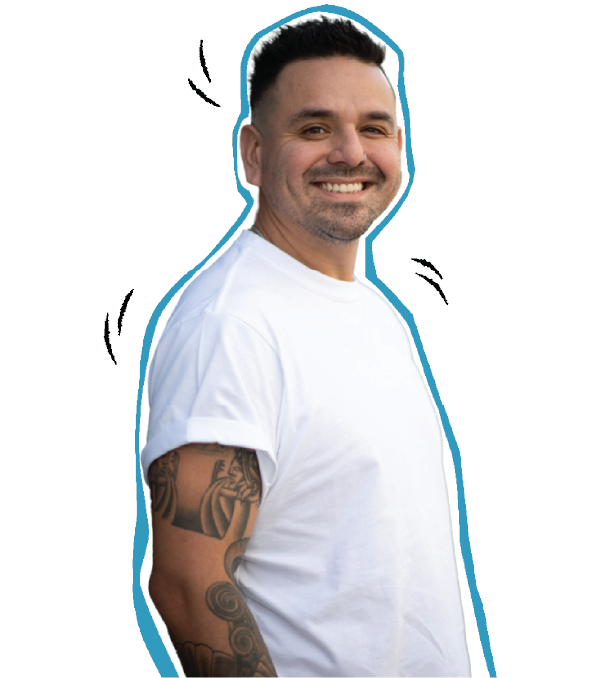
In this episode of the Commical Podcast, Marie speaks to Jye Smith, podcast expert, producer, and director of Double Star Co. He talks about all things podcasting and explains why a podcast could be the next big thing for your business.
In this upbeat episode, no topic is off the table. Jye discusses his experience talking about sex, entrepreneurs, and even bees – all through podcasting. He highlights the benefits of having an influential voice online, and how podcasts facilitate connection.
Jye breaks down the process of getting started in this informative episode. He shares his tips on finding an idea, choosing the perfect podcast host, budgeting for equipment, and much more. Podcasts provide a rare opportunity for natural, honest, and raw conversations with your audience. Listen to this episode to find out how you can get yours started.
Commical – Episode title: Podcasting, why you need to get started
Published 12/05/2020 on Chasing Albert website, spotify and apple podcasts.
Marie 00:00
You're going to love Jye Smith. He's a creative strategist and an agency coach, and he also happens to be a podcast producer. He's behind Maker and Creator, as well as Australia's first ever beekeeping podcast, Honey, I'm Home. He's here to talk about whether brands should consider starting a podcast and what they can expect when they do. Oprah, Steve Jobs, Andrew Denton and, okay, not me — to me, these guys are masters of communication. The rest of us, well, mainly you, because I'm a pro, fumble our way through. Commical examines this funny little thing called communication that can either tear us down or make us soar. Join me. I'm an amateur comedian and a communication expert. Join me and listen, learn and laugh through the experiences of my very talented guests.
Marie 00:50
All right, welcome, Jye.
Guest 00:50
Thank you very much. Thanks for having me.
Marie 00:52
My absolute pleasure. I've actually been desperate to pick your brain because you are someone I look at and go, mate, he's killing it. This guy knows podcasts. How long have you been doing it now?
Guest 01:02
I had to answer this this week. It's 2020, so I must have started in 2017, or I think that was when the equipment was bought, because I didn't buy my own equipment. Actually, my flatmate was sick of hearing me talk about, ‘I'm going to start a podcast,’ and I had music recording equipment. He was so sick of it. His name's Eddie. He surprised me on my birthday and it was the nicest gift — a beautiful microphone, one of the boxes you need, and there I was, off and running.
Marie 01:33
What a legend. And what was your first podcast about?
Guest 01:36
It was about sex. It was Asia's first sex podcast.
Marie 01:41
So this was Better in Bed. Is this when you were living in Hong Kong?
Guest 01:46
Yeah. We must have launched it officially in 2016, actually, come to think of it. I was sitting in a bar with my colleague at the time, Sarah Tang, and she was a brand strategist. She was saying, ‘You know, I really don't think brand strategy is for me. I really want to get back to my sex therapy.’ I'm six glasses of wine in and I'm like, ‘Sarah, let's do a podcast.’ And she's like, ‘All right, I'll only do it if you co-host it with me.’ I blushed instantly. Literally that night, we wrote a really small plan and then, I guess, three or four years later, we got 50,000 downloads and she's built a career out of it. She left advertising almost completely. I know she still freelances a bit, but we talked about everything from penises to masturbation to our favourite — our most looked-after episode was on cunnilingus, because it was the only one where we had two male guests, and it was a largely female audience. It taught us a lot about what people are into.
Marie 02:57
It was a lot of fun. Did you find it easy to talk about?
Guest 03:01
No. I'm even smiling like I used to back then about it. Somebody said by the time we got to season two it wasn't quite as interesting because we were not as nervous. Sarah was always quite comfortable, but I was playing the — no pun intended — straight man on it, where she was the knowledge expert and I would ask the layman questions. That taught us a lot about the call and response between hosts you need. But no, I was not comfortable. There are some episodes on there that I wouldn't even mention.
Marie 03:38
Again, I know when I do, even in my stand-up comedy sets, when I talk about sex — which in a couple I do — you know, if I've got that reaction after sex, I'd put out more often. I've got to tell you, I grew up in a conservative, traditional Lebanese family, so talking about sex is huge for me. I know you're probably looking at me — I used to get a lot of people saying to me, ‘Oh, you don't look Lebanese,’ and no one ever used to pick it. I guess I was too fair to be Lebanese and too hairy to be Australian. But one person came really close and said, ‘Are you a Yeti?’ I have another Yeti joke, but it's abominable. I swear to you, I feel uncomfortable doing it on stage. I just feel so tense. I think, ‘I'm not a prude. I don't know why I'm behaving like this,’ but there's something about talking about sex openly that just feels really strange.
Guest 04:44
One of the big insights we talked about was the fact that especially women think boys are much more comfortable talking about it, but it's the opposite way around. We never talk about it. It's not like we break down what happened the day after or the week after. We just don't talk about it. Never.
Marie 05:03
My husband tells me that. He goes, ‘You know, boys — it's like a no-go zone when it comes to talking about your wife or your partner. Not a single word.’ You're right. Us girls probably would do it a lot more.
Guest 05:13
Yeah. I've known some of the things that have been discussed and I'm like, whoa, blush. When we did a live event eventually, that was the hardest. We had 250 people in a packed-out bar and, again, I won't talk about the topic, but there are photos of me just blushing and not even looking at the audience because it was full on.
Marie 05:35
That's cute. I would love to see that. But now you also podcast about stuff that's in your professional life or professional zone, which is creativity and brand strategy, et cetera. Tell us a little bit about your podcast, Maker and Creator.
Guest 05:50
Yeah. Maker and Creator, which I do with Alex Adams, was a promise I had to keep. It was another funny story. Unsurprisingly, we were in a bar — there's a theme, because no good story ever started with, ‘I was having a glass of milk.’ We were in Zephyr Bar in the city and I said, ‘Look, Alex, I'm thinking about coming home. I don't really know what I'm going to do if I get back to Sydney.’ She's like, ‘Look, I would love to do a podcast with you.’ And I'm like, ‘I've got one that's half-cooked. It's about creativity.’ And she's like, ‘All right, well, if you come back, I promise I'll do it with you.’ There was a really thin line between me wanting to talk about, quote, unquote, work, because creativity is obviously a big part of it, but it was actually more the impact on culture that it had — café culture and the creativity around café culture, or barbershops. I'm a big barbershop fan. I'm obsessed with men's barbering and old-fashioned straight razors. I was always fascinated by those things. Then it became an outlet where Alex and I said, ‘We're never going to bring on a work topic.’ So for 15 or 16 episodes we didn't bring on a chef, and I didn't bring on anyone from advertising specifically for even longer than that. It was because we needed an outlet more than anything. I think a lot of podcasts actually start from, ‘I'm thinking about things that I want to get out there.’ Alex and Sarah both didn't really listen to podcasts, but it came from a very natural place: I can talk about this without needing to be prepared for it.
Marie 07:39
Yeah. And so when you started Maker and Creator, did you already have the name for it?
Guest 07:46
I did, only because I'd started a couple of episodes with just me as the host. I interviewed a barber and a tattoo artist. But the problem we found — and I talk a lot about this in my little podcast courses — is that the dynamic and the energy with one host or only one guest is very, very different. Unless it's somebody like yourself, who I know, and we're both quite extroverted, it's a bit dull. Especially creatives — creatives are generally more introverted. Huge generalisation, but talking to a tattooist or a barber who is so deep in their craft, it's very hard to convey that across a podcast, because their expression isn't with words.
Marie 08:34
Yes, with what they do. And when you set out to start this, what did you set in your head as a goal? What were you trying to achieve with it?
Guest 08:45
The initial goal with Better in Bed was to launch Sarah's career, basically, as a sex therapist and sex coach. That was very different. But that was never my goal with Maker and Creator. The specific vision I had in my head was: I know a lot of interesting people who I have great conversations with — again, generally in a bar — and I wanted to get their story on tape or on paper or on video, something. I wanted to create a collection of fascinating stories around the maker or the creator behind an idea. A great example is a mate of mine, Steve, who runs Clay Cups, which is an eco cup. I wanted to get his story on tape. All the podcasts out there were about either the entrepreneur thing — ‘Tell us about adversity and how you overcame it’ — or they were about the business idea and why it's so successful. No one had really done that thing of, okay, you're a brilliant café owner, you create these cafés that are cultish — what's the impact on culture and what's the reflection of culture that comes through your creativity? So it was a documentation exercise.
Marie 10:13
Did you think to yourself — and be honest, right — ‘I want to do this, and on some level I want to sell ads, I want to make money, I want to become an influencer in this space’? Was there any kind of commercial goal that you set or hoped for?
Guest 10:32
The money piece is interesting. I guess money would have been a nice outcome. I was really lucky that at the time I launched it I was still working for a management consultancy, so money wasn't an issue. But I would have liked the notoriety or the infamy of having a podcast sponsor, even though most podcast sponsors are a bit awful — a mattress or a shipping company. If anyone's listening to this, I'll take your money. But definitely, as much as I hate to say it, I think it was more about being an influential voice on creativity. Obviously I'd done blogs and writing and speaking events. I hate speaking events now — they're just so contrived — but at least this way I can be really honest. I think without a video in your face, you can be a lot more nuanced in how you present yourself, because you're not worried about how you look. Did I smile weird? Am I sitting in the right position? Am I wearing the right thing? It's a very private medium. It's in someone's ear, so I think that makes it very personal. That level of influence is what I really wanted. I wanted to have an opinion on the things that I was seeing.
Marie 11:52
So it's almost like having a channel through which you can build your thought leadership platform and share ideas.
Guest 12:01
Totally. And something that you know from an advertising point of view — it's something I recommend because it's a beautiful piece of owned media, but it has a huge earned component. You can't force a podcast to be famous. Even with PR — I was on Channel 10 the other day for my new beekeeping podcast and, you know what, 11 a.m. Channel 10? Yeah, that was weird. But Kerri-Anne Kennerley — that's PR gold. Shout out to Ginny Brown, who made that happen. But it didn't catapult us. That's not how it works. It's earned through listenership. From a thought leadership point of view, it was about me, in the advertising world as a strategist, having a creative voice. I got to pick the things I wanted to talk about, just like a thought leadership platform. Yes, it's on my terms, but it's much more credible, I think, because it's not a weird article — it's just my voice.
Marie 13:04
You know, the other thing that I love about podcasting is that it's much easier to do than a blog and a lot less lonely, depending on the style. A lot of people podcast on their own, but I love chatting to people like you and having that interaction and letting people in on it, because it's just so natural and open and honest.
Guest 13:25
It is. I think it's much less edited. Even the podcasts I prefer are very conversational. That's not to say that the true crime podcasts or audiobooks I listen to aren't there for a reason, but it's not as intimate — and I mean intimate in the sense of, I know and trust what this person is saying — especially on topics that require a level of expertise far more than reading an article.
Marie 13:55
How would you tell a brand or an organisation to go about coming up with an idea for their own podcast, and is it for everyone?
Guest 14:05
I don't think there's a company that couldn't do it. The big caveat is, because it is so personal and intimate, if you don't like the presenter, it won't work. There are people who just don't want to hear me do a podcast, who might turn up to one of my events. It's unlikely, but I know a couple who are just like, ‘Nah, I don't really get into it.’ It's not even that they don't like me.
Marie 14:30
They might not like your voice. I know a lot of people get annoyed. Do you have that when you listen to someone's voice and you're like, ‘No, I can't deal’?
Guest 14:36
I reckon that's a huge part of it. I think I want to be the guy who has the data point on that — the percentage of voice in the mix of liking a podcast. Anecdotally, I reckon that's 75 to 80 per cent of it. If you can't connect with that person's voice... and I'm funny about accents, I'm funny about the way they use words. But if they yell, I don't like yelling podcasts. Even though I'm guilty of it sometimes, I can't listen.
Marie 15:07
I'm a very loud person, borderline yelling most times.
Guest 15:13
Twenty per cent louder than most people. So when I do this with brands — and I've done it for a few interesting ones — everything from Commonwealth Bank's first ever podcast...
Marie 15:24
Did you? What was that about?
Guest 15:27
It was about small businesses learning from other small businesses. Maybe that's a good example. The advice I give is: you need to ask yourself, what's the utility each episode brings your audience? To wake it up even more, back to our off-mic conversation, what's the problem you're solving? Commonwealth Bank wanted to do a podcast and we were talking about where to start. I said to them, if you want to do this, it can't be anyone from Commonwealth Bank talking. That's a really hard thing to say, right?
Marie 16:04
Especially when the marketing manager sees stars in their eyes and thinks, ‘Fuck, this is my big break, man.’
Guest 16:10
‘This is it. Joe Rogan, watch out.’ They were really good about it. They were like, ‘Who wants to hear from us? Who's the voice of Commonwealth Bank?’ And I'm like, ‘But that's not what this brief is. This brief is around how do we connect with small businesses? What's the relevance?’ Thankfully, being a bank, they had a huge stack of research and I was going through it. One thing kept coming up: a bank shouldn't tell me what to do. A bank is there to provide a financial utility or service. However, they might know some things well, but I'm interested in what other people have to say. So we called it Leave Nothing to Chance, because the thing that connected all small business owners is none of them can take chances on their own business, so you're constantly thinking about those things. We set it up with a comedian to host and we found six small business people who had great personalities and great stories. The bank was purely there as a backdrop, and it was a way that each episode really sought to answer a different part of the small business journey: how do you go from idea to starting, how do you go from starting to your first customer, how do you go from small business to scaling that, how do you deal with adversity? They were really full topics that people could engage with, as long as the bank didn't say anything and these other small business owners had their point of view. It was a way that we could really put our money where our mouth was. That's the utility, and we had to make some hard decisions based on the voice — who's speaking, who wants to be speaking. It paid off. It was really well received.
Marie 18:12
How did it pay off? How do you evaluate the success of a podcast?
Guest 18:20
If you're doing one for a B2B business and they have maybe 30 customers they talk to, then as long as they send it in their little newsletter to those 30 customers and it says something, it's very different. They're kind of happy. But what I said to them was: you have an interesting point of view on the future of Australia's sustainable energy. I think this would go a lot further than you're probably thinking right now. Let's have a think about getting to your first 1,000 listens per episode. Now, that's a lot, and I said to them that might take a year. In terms of setting success goals, if you can convince 100 people to listen to your voice once a week or once a fortnight, that's a good first goal. Most of the brands I talk to aren't too impressed by that number, but I'm like, what else do you want them to do? Do you want your customers to hang on every word you say? Then hire a journalist, do it properly, publish a magazine. Then you should look at your email database. If your database is 10,000, you might have a 10 per cent open rate and a 5 per cent click-through rate. There's your number. You get to that, and that's where you start from. The other numbers are downloads or listens, and then subscribers. Some podcasts are geared towards subscribers, which might be a weekly news-based podcast, but some might just be based on downloads, like the beekeeping podcast that I do, Honey, I'm Home. You only listen to that once. You probably wouldn't keep tuning in. It's only six episodes. There will be more, but they're slow, so subscribers aren't really what we go for.
Marie 20:11
And so what then would you say to a business owner or a brand that's starting their first ever podcast and looking at it as a means to build some awareness around their brand? What's a good number for them to aim for in terms of downloads? Is it 100 in the first three months? Is it 1,000? What is it, and is it even important?
Guest 20:37
I don't think awareness is the right lever to pull for a podcast. That's kind of where I'd stop at that. It's such a deep level of engagement. It's deeper than an ad, deeper than a Facebook post, deeper than a paid Instagram post. If you're a services-based company in technology selling a piece of software, and your audience in Australia is 50,000 people, I'd be looking to get to five to ten thousand total listens for your whole podcast set, however many episodes. That's a pretty good section of your customers who are listening to it. How I would do that is I would use your trade media publications if it's B2B and your consumer tech publications if it's B2C.
Marie 21:24
Do you mean from a PR perspective?
Guest 21:29
Yeah. I think a 10 per cent slice is a really good result, because you are fighting against the fact that not everyone listens to podcasts. It's a very fast-growing medium, but I would just do the numbers. I'd look at your total customer base, multiply that by the percentage of podcast listeners in Australia — I think it's about 25 to 30 per cent of people who have listened to a podcast. We don't really have a number on active podcast listeners in Australia at the moment. Then I'd work out what your KPI would be based around what distribution means you have. If you've got paid social media advertising, it's expensive and it's probably hard to get a few clicks there, so it's not a great thing. But if you can buy ads on other people's podcasts, that's a really quick way to do it.
Marie 22:25
Yeah, I reckon buying ads on other people's podcasts is a good avenue, because at least you know these people are already listening to podcasts.
Guest 22:34
But you can be niche about it. One hundred per cent.
Marie 22:37
And if I was starting a podcast as a business owner, would I be promoting it through my own email marketing database, my own social media platforms, a little bit of PR? Is there any other trick to doing it?
Guest 22:51
Not really. I think your email database is quickest. It's very call-to-action driven. It's clear what you need to do. Definitely through your own platforms like your website. On social, you're paying for every single thing you do. You can create really great snippets, though. I had to Google an acronym the other night — TL;DR, too long; didn't read. Apparently that's a really common acronym. Sometimes you'll see this at the top of a blog post and it summarises what the article answers. If somebody can't listen to 20, 40 minutes or an hour of your podcast, then you might want to create a snippet for LinkedIn, which I've seen perform really well. They're these beautiful little audio snippets overlaid on a video, and it's a really quick way to get some info. I think it's one of the best ways to do it.
Marie 23:53
What's the ideal length of a podcast?
Guest 23:56
I don't believe there is one. For businesses, though, I think it's sub-20 minutes unless your audience is interested in an in-depth topic. If you're, I don't know, a brewery brand — I don't know if Young Henrys have one, so forgive me if they do. Although Young Henrys shouldn't do it from a brand perspective; they should do it about culture and not what they're doing anyway.
Marie 24:20
Don't give away free advice. Exactly. If you're listening, see the details on this podcast for ways to contact Jye.
Guest 24:32
Yeah, but Maker and Creator is specifically 45 minutes, because we need to go deep enough into a topic that makes sense. If it's less than that, we've just given a news update, but we're not a news podcast.
Marie 24:44
Yeah, and it's kind of like writing. I feel that the shorter your copy is, the harder it is to write. I feel it's the same with podcasts. Keeping a podcast short and concise, especially when you're interviewing somebody, is really tough.
Guest 24:57
Well, it's that Mark Twain quote, isn't it? ‘Sorry I wrote you a long letter. I didn't have time to write you a short one.’
Marie 25:04
To edit down. Yeah, that's a good quote.
Guest 25:07
I say that to every client — not as ‘hello’ — but you know. 7am is a great news podcast here in Australia by Schwartz Media, and they do 15 minutes every morning. I went from not being engaged in politics and policy to one hundred per cent having a point of view on most things now, because it's probably ten questions all up they ask. It sounds bulletproof.
Marie 25:34
What else do you listen to? Out of interest, what recommendations have you got for us?
Guest 25:39
Do you want the work stuff or the fun stuff?
Marie 25:42
Fun. Let's start.
Guest 25:44
So, Do Go On. That's a podcast by three comedians in Melbourne. One of them reads a report to the other two and they just riff off each other. They do everything from Shackleton to Queen Elizabeth to the Beatles — a point in history. Fantastic. And that's a two-hour podcast every Wednesday.
Marie 26:10
They do it for two hours every week? And they're funny?
Guest 26:15
It's hilarious. It's amazing. You would love it. Then the other big one for me is Omnibus, which again is a trivia-based podcast that's twice a week, about an hour each. That's from two Americans in Seattle — phenomenal content. There's two guys in Melbourne, two comedians, who do something called Two in the Think Tank, where they come up with five sketch ideas every Wednesday. That's a great one to show clients or anyone in creativity, to show what an idea can be if you know the output of an idea — what five ideas might look like. There's one called Casefile here in Australia, which is true crime. There's one called Asian Madness if you really like gory true crime. There's one called True Crime Horror Story, and it's just the gorier stuff. That's really dark. Then probably the last one I recommend to everyone is The Infinite Monkey Cage, which is a science podcast.
Marie 27:16
Okay, what's that about? That's a good name.
Guest 27:19
It's Brian Cox — Professor Brian Cox — who is a science communicator. As soon as you see him, you know who he is. And Robin Ince is a comedian. They have three panellists from the science community and they might talk about black holes, the sun, everything that is space and science based. So it's really fascinating.
Marie 27:43
What would it cost a business? For me, putting together a podcast hasn't cost me an arm and a leg, to be honest. In total it's probably cost me maybe 400 or 500 bucks if I consider the equipment, so not much. But then again, I'm recording over Zoom at the moment until this ISO business is over, so it's not the ideal scenario. How much should a typical business budget for — not the CommBanks of the world, think more of a small to medium business — what would be a realistic amount to expect to splash out on a podcast in terms of production and equipment? They don't have to buy their own equipment, do they? They could always just rent a space or sign up to a podcast studio.
Guest 28:25
Yeah. A podcast studio with an engineer works out at about 500 bucks an episode. Jesus. If you get a studio space, that's because you're paying for an engineer on top of that. I do a lot of office podcasts, so I offer a rental thing now where people just rent my equipment and I come and set it up for them. Depending on whether I'm the producer, either technical or creative producer, I might charge a fee on that. In terms of equipment, 1,000 bucks gets you stuff that'll last a lifetime. 500 bucks will get you stuff to get you started. On a business budget, definitely just go for 1,000 bucks. Otherwise you'll just buy it all again later anyway if it goes well. If it doesn't, there's a great resale market out there for audio equipment. In terms of hiring someone like me, it's probably going to be, for an hour episode with three guests or three people, 200 to 350 an episode, which I think is really reasonable considering that piece of content is going to last you.
Marie 29:45
But what would need to be included for each episode? How much work would go into it?
Guest 29:53
For a full production — like full creative production — the analogy I use is, you wouldn't just try Photoshop yourself for something that's going to go on your website's front page. You wouldn't just say, ‘Oh yeah, I'll download Photoshop and have a crack.’ What you're doing, at least in my system, is working out the vision of the podcast — and I don't mean that in a wanky way. I'm like, what the hell do you want this to be? Then, what's the utility? That takes a long time to really make sure it's the right one, because if you start it wrong, you kind of back yourself into a corner. What problem are you solving? What question are you answering every time? Then I do a season map: how are we going to structure it, how many seasons do you even want, do you even want seasons, do you want 20 episodes, do you want three? There are some major podcasts that have 10 episodes all up. You've got to think about all those things. Before you even do a season, you need an episode structure. How long is it going to be? Is there an intro? Is it scripted? What's the format? Is it an interview? Is it conversational, functional, comedy, formal, casual? You've got to answer all these questions, because then you go, okay, so what do we ask our guests? Then you need a brief. Before Alex and I even do an episode each week, for instance, when you came on our show, I had to write her a brief: this is who Marie is, this is what we're going to be talking about, this is her background.
Marie 31:58
She's unhinged. Good luck.
Guest 32:01
Be careful. Hide the wine. Because you need to structure questions and work it all out. Then you need to tell somebody like me, who does the technical bit, what you want me to do. Do you want music? Do you not want music? Do you want me to edit out the F-words? Do you want me to keep them in? Do you want me to edit out your ums? Do you want me to do the technical and creative edit? You know: this piece of conversation didn't mean anything. When Sarah and I did it, Sarah was a stickler for staying on topic, whereas I kind of go all over the shop. Sarah would have me remove chunks of conversation that didn't work. So as a technical producer, my job was to make it sound like the episode was only 40 minutes when it might have been twice that length, and it often was. I'm taking out entire conversations, making sure there are no callbacks, and then making sure it sounds perfect to the listener. Because if you change register, if you change tone, you'll hear it straight away. You'll know something's missing.
Marie 33:05
Yeah, having a good editor is really important — someone who knows what they're doing from an episode production and editing perspective. For me, it's a skill. I trust my guy completely and say, ‘Look, you just do it.’ I hate listening back to my own content, so I put full trust in him and say, whatever sounds right...
Guest 33:28
Do you ever listen back to your episodes? Alex doesn't. I have to do it, and I'm like, I have to listen to myself.
Marie 33:37
I get one of my best friends, Linda — I send her everything — and my husband. I go, ‘You listen to it. If you feel embarrassed to have me as a wife or a friend, you need to let me know. I can live with okay and amazing every time, but if it's a shit show, you need to let me know. I can't have that stuff out.’ But yeah, I can't listen to it. I've been like that even watching some of my stand-up back in the beginning. I found it really hard, but you have to do it to learn and improve. So I'm working on it. It's a work in progress. Now we all are. What's next? Any new and upcoming podcasts for you?
Guest 34:19
Before COVID — BC, is that what I meant to say now? — I started one called The Truth About Advertising, which you're on a list for, mind you.
Marie 34:33
No. You do not want me. I have truth juice every time. I can't lie.
Guest 34:41
That's what we want. You don't want me on there. Unfortunately that one got stuck. We did two or three episodes that were really good, and I was toying with the idea of doing them over Zoom and blah blah blah, but I can't bring myself to interview like this. A lot of it is people like yourself, the owners of some really reputable agencies and consultancies, and I don't know all of them, or I know them through reputation. Unless I can get them in a room and honestly put a glass of wine in front of them — or it's early enough in the morning where I can put a coffee in front of them — because it's meant to be 25 to 30 minutes: here's a topic. We did The Truth About Sponsorship in Sports. It was fantastic. It was really interesting to hear about how it worked. It's for advertising people. It's not for Joe Public. But that one will come out eventually. Other than that, more episodes of Honey, I'm Home. That'll be good. But Maker and Creator continues. We've got three episodes in the can at the moment that we're going to edit. That'll be my weekend.
Marie 35:53
Awesome. Thank you, my friend. So good to have you on.
Guest 35:57
Yeah, hopefully that'll be useful. But look, if anyone's got any questions, I'm always open.
Marie 36:03
Totally, and I'll include your details in the podcast episode, because I think one of the things is, for me, I work in this field, right? So it's easier for me to think about content and pulling these things together. So I always think it's so easy — just go out and do it. It won't cost you much. It's better than a blog. But in reality, it's not something that should be taken lightly, and it definitely has repercussions for your brand if it's not done in a well-thought-out manner.
Guest 36:29
It doesn't have to be hard, but it has to be considered.
Marie 36:41
Well said, my friend. There's a motivational poster waiting with Jye Smith: ‘It doesn't have to be hard.’ Please send me a photo of yourself with your hand on your chin, looking thoughtful and experienced, and I shall create a meme. Awesome. Thanks, mate. Really appreciate your time. I love chatting to you, as always. Good to see you.
Guest 36:57
You too. Take care, mate. Bye.
Marie 37:00
And that's Commical for this week. If you'd like to join the show, suggest a topic or ask me a question, hit me up on Instagram at mariedall, or email me at comicalpodcast@gmail.com. Thanks so much for listening. See you.
About Jye Smith
The talented and creative Jye Smith is a successful strategist, podcast producer, and agency coach. A finalist in the AdNews Emerging Leader of the Year 2019 and listed in B&T’s 30 under 30 leaders of tomorrow; he is a force to be reckoned with. With over 15 years of experience, Jye has held senior positions in creative, public relations and digital agencies. Notably, working for companies such as Weber Shandwick and PWC.
Jye is now the director of DoubleStar Co, a creative studio specialising in brand, design, and strategy for a hyper-visual world. He’s also the principal of culture consultancy, You’re Good, Get Better, and sits on the board of Vibewire, a youth accelerator hub.