OUR PODCAST
What's in This Episode
Most people agree that workplaces should be diverse. Inclusive. But it doesn’t happen just through good intention. Biases in tools, ‘gut feelings’, even the way a job ad is written or where it’s placed – could all be hindering the development of a diverse and inclusive workplace, and the benefits that come with it. This is a critically important and infinitely insightful episode that will show you how simple recruitment processes we all follow are leaving people out and businesses behind.
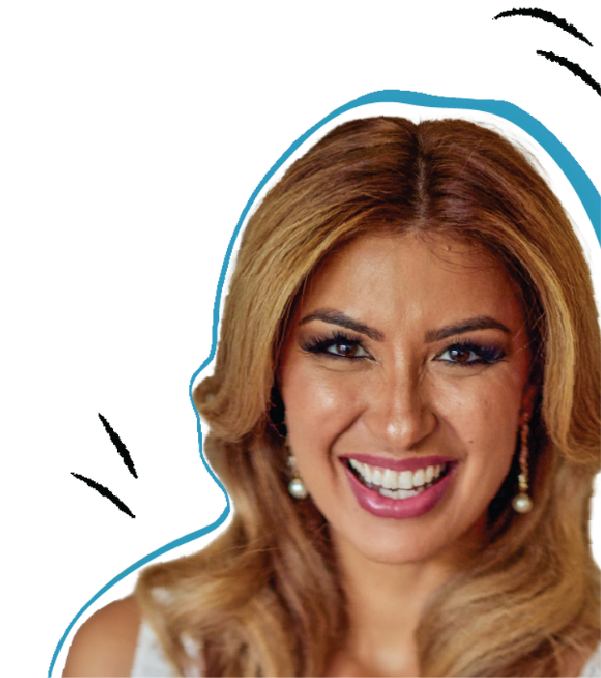
Special guest, Sabrina Maddock, CEO, Avanti Search, looks at the biases present in traditional recruitment systems and the significance of making workplaces more accommodating for diverse needs – especially people with a disability. Whilst Sabrina and her firm recruit for any office professional role in any industry, it’s their approach that is stand out.
Sabrina’s work emphasises the value of seeing beyond the CV, recognising the potential in each individual, and the benefits of a diverse workforce. She has been actively involved in government committees and panels, such as the City of Sydney’s Disability Inclusion Panel, advocating for inclusivity and continues to consult to the Australian Museum on the same topic.
Don’t be distracted by her colourful bio. She was a contestant on ‘The Apprentice’ with Mark Bouris. She authored a book that landed on a prime ministerial reading list. She’s even a former beauty queen! But the true beauty of Sabrina is her deeply human and super intelligent approach to finding the right talent without unconscious bias and therefore, without restriction. And the social and organisational benefit of that, is nothing short of outstanding.
In this episode, we discuss:
Sabrina’s journey from beauty queen to recruitment star.
Personal experiences with racism and bias in the recruitment process.
The value of inclusive and diverse workplaces.
Inclusive recruitment by design – things every business can do.
The problem with leaders and how their own networks can create wrong “gut feels”.
And more!
Commical – Episode title: The Case for Inclusive Recruitment
Published 07/04/2025 on Chasing Albert website, spotify and apple podcasts.
Marie 00:11
Hi everybody, and welcome to Commical. It's been a while since I've put an episode out. For what reason? Well, you know, running a business, raising a family, blah, blah, blah — those kinds of really simple things sometimes get in the way. But I'm really excited to be back, and especially to be back with someone who's rather amazing. I've got Sabrina Matic with me today. Welcome, Sabrina.Guest 00:36
Thank you so much, Marie.Marie 00:38
I'm really excited to have you here. You've got such an incredible career background. You're really, really diverse, and you've really lived life, haven't you?Guest 00:49
Yeah, done a lot. I've said yes to a lot of things.Marie 00:55
Before you were married, when your name was Sabrina Husami, you achieved quite a bit. In 2006, you were Miss World Australia, Miss World Asia Pacific, second runner-up of Miss World, and Miss Grand Slam. And then in 2007, you just gave it all up. Was that because you were hungry?Guest 01:17
What, tired of starving myself for the pageant? You thought I was dying for a Big Mac? God, no. I'm Lebanese Indian, so food is my life. There was no starvation involved. I didn't actually give it up. I just worked extensively with charity, which was my whole point of entering the pageant to begin with. And once I had those titles, I was able to do that ad nauseam, so that's kind of where my focus shifted.Marie 01:40
Shifted, and then in 2009 you did The Apprentice. Yes, that was a lot of fun. Was that in the Donald Trump days?Guest 01:49
No, we didn't have Donald Trump. No, it was Mark Bouris, who is of Yellow Brick Road fame — you know, the mortgage and home loan world.Marie 01:56
Oh, yeah, yeah, yeah. He's amazing, isn't he?Guest 02:00
Yeah, he's got a lot under his belt. Yeah, he's pretty cool.Marie 02:04
And so tell me, after someone competes in a pageant like that and then does The Apprentice, one would assume you want to become an influencer. But no.Guest 02:16
I was never that kind of person, Marie. You know, before I entered the pageant, I was a university student. I was studying psychology and English literature. My goal was actually to become a child psychologist, until I realized how shit psychology actually was, and how much guesswork there is in that, and how annoying children are, and then very quickly learned that wasn't for me. But yes, I was more on an academic or corporate career path, if you will, and always wanted to return to that, which is why I actually did The Apprentice. I was like, I wonder if I can get a bit of a taste of different corporate spaces and see if that helps me decide which avenue to take from there. And it did. It helped a lot. It helped me to go, yeah, I'd rather use my brain than my beauty or my entertainment industry background or accolades. And yeah, it helped me decide to get into sales. That's how I started my corporate career.Marie 03:10
And so tell me a little bit about that, and what led you to recruitment. Because you work in recruitment, you work in diversity and inclusion, and your consulting work has a focus on people with a disability and making cities and museums more accessible to them. How on earth did you pivot in that direction?Guest 03:30
Yeah, great question. I was a sales manager for a food technology company, so we were selling marketing tech to restaurants. Again, obsessed with food. So that was not a hard job to apply for and then get into. But when I was recruiting for my own sales team, the candidates that were coming via a recruitment agency passed on compliments to the recruitment agent that said, she's a really good interviewer. She's so easy to talk to. She asks really good questions. And so the recruitment agent actually reached out to me and said, hey, you're quite early in your career. Have you ever considered switching into recruitment itself, as you're such a good fit for it? And I was like, no, of course not. No one ever thinks to themselves, I'd like to be a recruiter. It's just one of those ambitious career paths. But I decided to go in and just meet the team and see what it was all about. And they started to talk about the money that you could make, the contacts that you make, and how much of a helpful factor is actually part of the role — like you're helping people find their dream jobs, essentially. And that really appealed to me, so I decided to give it a go. And here we are, 11 years later. So that's the recruitment side.Marie 04:37
Has it lived up to it? Did it live up to the dream that they sold you?Guest 04:42
It did. It was a lot of fun. It was high energy. You know, back then, recruitment was a little bit Wall Street, a little bit cowboy, so there was a lot of that real sales-gun atmosphere. And you'd write your numbers up on a board and ring a bell when you made a placement. So it was a really fun thing to be part of when you're young and you've got that hunger in you. But I quickly switched away from agency recruitment, which means recruiting for any business that needs your help, to embedding myself internally within recruitment teams for a single company and becoming their talent leader, if you will, because there was so much more you could get involved with in terms of initiatives, whether it is diversity, inclusion, or whether it's an internship program, graduate program, EVP. And I really loved having that more broad remit and understanding of how business operated.Marie 05:30
And so why did you start Avanti Search?Guest 05:34
I had spent about eight and a half years in internal recruitment. By that point, my then-fiancé was a recruiter himself, but agency side — had always been agency side. And I was working in a role, I was in a global head of talent role for one of the largest wine companies in the world, and I had a team in the UK and a team in Australia. So I was working Aussie hours to look after my Australian team, and then I was working UK hours to look after my UK team — like 14-, 15-hour days — watching my fiancé make money hand over fist and sit there on his seven-, eight-hour day, relaxed. I was like, I'm really good at this. Why am I not doing what he's doing? Could it be time, perhaps? Is there a bit of a taste in the market for an agency that has that internal recruitment approach, that actually gives a shit about your brand, takes the time to get to know you, understands the facets of internal mechanisms, but is an agency that can provide that to several different businesses? So that's why I started it. And luckily, it was a boom period in recruitment. It was right after the pandemic sorted itself out and people started hiring again. So it was really successful right off the bat. I got very, very lucky with the timing of it.Marie 06:47
I doubt it was luck, Sabrina. I've spoken to you already for eight minutes and 23 seconds. I'm sure it was a lot of smarts and a hell of a lot of grit. Thank you. One of the things — I mean, I know that Avanti Search recruits for office-work roles across any industry.Guest 07:08
Yeah, right. You've got it. So anything from sales to marketing to finance through to executives within a corporate business.Marie 07:17
But what I love about you — that really made me want to chat to you — was the lens through which you see people. Because I like that you don't just look at a piece of paper. I like that you really see the person behind the CV and look for potential. And I also love that you come at it from a diversity and inclusion perspective. Can you tell me a little bit about why you have that personal interest? Yeah, what the benefits are to a company that does look for candidates that are diverse?Guest 07:51
Yeah, absolutely. I have two types of disability myself, and I'm very diverse in background — you know, half Lebanese, half Indian — but I was born in Australia. I was raised a Muslim, which was a minority religion with a very bad name back in the day, September 11 and more. I'm a woman, so there was a lot already that I've experienced in terms of discrimination and people having some really negative conceptions of who I might be because of the parts that made me up. And I decided to start exploring what professional mechanisms I could get involved with that would help with the inclusivity side of things. So I actually started out on government committees that were about making sure that things were inclusive inside of a workforce, and then got invited to sit on the City of Sydney's disability inclusion panel and the Australian Museum's panel, and eventually chaired the City of Sydney's panel. So it's seven or eight years now, I think, of actually sitting there and learning about how an event, for example, is concocted in Sydney, what all of the different elements we have to think of to make sure everyone can access that event the same way, or if we install street furniture, what does that mean from a pathways perspective? And it's just so interesting. You really start to understand how many different levels people can be affected on, and therefore how much you can help. So it's a real passion project, because I have two types of disability, but also because diversity has always been a thing for me.Marie 09:24
Yeah, and I'm sure I speak for Lebanese people everywhere when I say, can we just claim you? Do you have to mention that? Can we just say you're 100% Lebanese and put you on our national flag? So cool.Guest 09:39
Your mum might have a problem with that — or India will feel some way about that. Or Australia.Marie 09:45
It's not like they have a huge population.Guest 09:50
But to answer your other question about how does it improve business's bottom line — it does exactly that. So the most profitable businesses in the Fortune 500 are those with an extremely diverse workforce and with more women in leadership roles. And there's a lot of movement now where, if people start to pay attention to things like — let's pick the gender pay gap as an example, right? I think in Australia, it's something like in the top quarter of earners, there's double the amount of men than there are women. And in the bottom quarter of earners, there's double the amount of women than there are men. So when businesses hear stats like that, they start to think, okay, I can affect the bottom line by making sure that if I'm recruiting for a female candidate, perhaps I don't take her as the bargain that she is because she's been out of the workforce for longer, so she's been paid less systemically. Instead, I'm going to offer the same amount as if she'd been there for the entire time, like the guy was, offered the same amount of money, and then start to move the needle. And I think there's a lot more appetite for that, you know, affecting change from leaders now. And that's what I consult them on. I'm like, do you realize that maybe a bargain is not a good thing? Maybe you're contributing to the problem by offering her the lower salary. Should we maybe look at that differently?Marie 11:06
Do they?Guest 11:08
Yeah, they do. People are really interested now in how do we change this? I think a lot of people are starting to experience it themselves.Marie 11:15
And they're like, screw this. Do you find that the female leaders are more receptive to that conversation than the male leaders?Guest 11:21
It's an equal amount of receptivity. Yeah, I feel like maybe finally men realize that it's not enough to go, oh, you know, I'd offer the same opportunity to a woman that I would to a man. It's, but how do you action change? You might think to yourself, oh, I've got nothing against women, but then what do you do to change the situation for women? And so there's a lot more involvement, not just dialogue, which is great to see.Marie 11:48
What about — I mean, obviously diversity, one is gender diversity, for sure. What about in terms of background? And I do wonder whether your name change from Husami to Matic — whether you've noticed any difference to the way people might first respond to you. Have you noticed any difference?Guest 12:09
I haven't at all, but I think that's probably indicative of the times we live in now. About, gosh, 20 years ago now, I'm going to say, my very first boyfriend had a Lebanese name and surname, and was applying to jobs in the pharmaceutical field straight out of uni. Had a really good degree under his belt, and wasn't getting any callbacks. And I remember him then anglicising his name on his CV — exactly the same CV, same format, same wording. Nothing changed except his name, and he started to get called by the same companies that had ignored him previously. So that was a real eye-opener. I remember just being so disheartened, knowing that that was a thing, and nowadays seeing that that's much, much less of an issue. But I think that's why so much recruitment technology out there is now saying, why don't we de-identify CVs, where you just remove the name altogether, or the address? You don't know where that person lives. You can't make assumptions about, oh, they're a Westie, or — do you know what I mean?Marie 13:09
Yeah, I have a similar story to your ex, actually, because I was applying for jobs when I first graduated — well, I didn't really graduate because I dropped out of uni, but didn't tell my parents, so I hope they're not listening, because till this day, Marie studied. Yep, I did. I would apply for jobs and I'd have my address on there. Now, my maiden name was Naja, which I don't think is a typical Lebanese name, and you can't directly pick it as one.Guest 13:42
What was it? El Naja?Marie 13:45
El Naja. And then my parents dropped the El, so it was hard for people to tell. But I had my address there, which was Bankstown, right? And I would send out my CVs and I'd get nothing. And then it dawned on me, Marie, just remove the Bankstown. So I removed my address and I got calls. Isn't that bizarre?Guest 14:02
It's wild — like, the assumptiveness, you know?Marie 14:06
You know what? As a business owner now, if people have their address, the more remote, the more diverse, the more Westie —Guest 14:18
Yeah? Is it reverse discrimination?Marie 14:19
Now, did I just admit that? Okay, I do not do that, Sabrina, at all. But I do pay extra attention to people that I think might otherwise go overlooked. But I still do — I'm still a business owner, right? So I'm still looking and thinking about, okay, I still have to get the best person for the job. So I also wonder, from a diversity point of view, whether that plays into people's heads sometimes, just secretly. You know, the woman comes across, they see she's in her 20s — is she gonna have a baby? Oh God, is she gonna leave me hanging? I think these are sometimes realities, and it's heartening to see that it's changing.Guest 15:02
You are absolutely right. There's a wonderful little exercise that I sometimes do when I'm doing consulting work with leaders called the Circle of Six. Have you heard of it before?Marie 15:13
No.Guest 15:14
So you basically ask leaders to think of the six people in their life that they are closest to, as long as it's not a family member or their significant other, and they write those names at the top of a piece of paper. And down the left-hand side they write different demographic info, like age, gender, ethnicity, education, work background, et cetera. And we ask these leaders to place a tick against each of those names if they happen to match you in that category — like they're the same age as you, the same ethnicity, or the same gender, or whatever. And the amount of ticks that these leaders then usually see on their piece of paper — that the six people they trust the most in their world are actually really similar to them in a load of different ways. And the lesson that we then teach them is because your innate trust is towards people who are a bit like-for-like, when you go through a hiring process and you're trying to — yes, you might be going through a formal assessment, but you're also trying to trust your gut instinct on who's going to be a good fit for your team — that gut instinct is often informed by this preconceived bias as to who is actually trustworthy, and it's people that are like you, right? So we try and say, perhaps next time don't trust that so-called gut instinct. Really have a look at the person that's challenging your gut a little bit, and you're going, oh, I don't know if they're a fit, but I can't put my finger on why. Maybe the why is because they're just a little bit different, and you haven't walked in their shoes. They might be, let's say, that young lady that could be a mum in the not-too-distant future, but you're making assumptions because you're an older white guy and that's just kind of the world that you know. So it's a really useful exercise for breaking down those stereotypes during recruitment.Marie 17:01
Now, diversity — yes, we've covered women, we've covered ethnicity — but what about people with a disability? Where does that fit in? So, for example, I'm looking to hire somebody in a marketing role. If I wanted to be inclusive and cast that net, am I recruiting in exactly the same way, or am I changing my approach?Guest 17:20
What a great question. I think there are little tweaks that we can all make to the recruitment process that will just remove some barriers to entry for disabled people — or for women, let's say. So a good example would be: if it comes to disabled people, if you put in your ad what the physical or mental requirements are of the job, then people can self-select out if they're like, oh, for example, you have to be able to sit at a desk for eight hours a day. I have a spinal condition that prohibits me from doing so, so I won't apply. Or, no, despite my disability, I can actually do this thing. That's totally fine. I can apply for this. So that's one thing, is to write down the inherent requirements of the role. Another thing is obviously to make sure that the actual content or text is compatible with, let's say, screen-reading software, so someone who has a vision impairment can actually use their technology to read the ad and be able to apply in a normal way. Another very simple but obvious thing is to just write right at the bottom of your ad, we're committed to an inclusive recruitment process, so please contact us if you need an adjustment during your process so that we can adjust. For example, it might be someone like me with a hearing impairment. I need to be able to see my interviewer, not just have a phone interview, in order to do my best, because I read lips. So I might just say, do you mind if we hop on a video call instead of a phone call, so I have an equal chance at getting it right? Just little things like that. You know, with women, this is a really interesting one for you, Marie. We're so critical of ourselves, apparently, that if the ideal candidate bullet points — you need to have this level of experience, this education, this, this, that — if that list is more than six bullet points long, women tend to self-select outside of the process. They go, I'm not going to apply. There's too much there that I can't do, or I am not. Whereas guys will go, oh, like three out of the 12 things are spot on for me. I'll hit apply for this. So the advice there is: keep it short, no more than six. That way there are fewer things for us to go, oh, I don't know if that's me, and therefore not even apply.Marie 19:28
Is there an argument for, no, I'm leaving the list at six, and I'm looking for that one woman out of a million who goes, yeah, literally, I can do this?Guest 19:35
There is, but good luck. What if she doesn't see the ad?Marie 19:40
Like cast that net. No, sorry, go ahead.Guest 19:48
I was gonna say, I think the stats kind of speak for themselves. You know, 18% of Aussies classify themselves as having some form of disability. One in five of those disabled folk have some sort of mental or behavioural disorder. So if you just think to yourself, okay, I'm cutting out 20% of my potential workforce if I'm not making my ad inclusive, or if I'm not making my process inclusive, what is that doing to my team and my work? That starts to shift people's perspective, I think. It's not just about doing the right thing — being a good company and we want everyone to join us. It's: everyone can't join you. You've got 80% of the options now. Does that make sense?Marie 20:31
Absolutely. And you know what? Doing the right thing — I think it's one thing to want to do the right thing, but you can't hire somebody who's got special needs if you can't deliver on those needs.Guest 20:43
Absolutely.Marie 20:44
Which is a whole other thing, which I want to get to. I want to ask you this: Seek, for example, is, I think, the number-one job ad board in Australia.Guest 20:51
It is, followed by LinkedIn, yeah.Marie 20:53
Does that offer — does that support the technology where people with a sight impairment or that are blind, is it able to translate and read it out to them? Is it compatible?Guest 21:04
No idea. That's a great question. I have absolutely no idea if they've optimised their website that way.Marie 21:11
So where do you recruit if you're adding an ad?Guest 21:14
Great question. One of my biggest points of difference is I don't advertise. I only approach people. I tap specific people on the shoulder and say, I took a very thorough brief on what these guys are after. You are it. Would you be interested in having a chat with us? And then we go from there.Marie 21:35
Wow. Sabrina, I never, ever thought such simple things could really leave out so many people. Freaking crazy. You must know a lot of people. How you're running a business by knowing all these candidates — my God. I don't think I know more than — no, I lie. I know a lot of people, but God, you'd have to know a ton, right?Guest 21:58
Yeah, you've got to. And you love people. You've got to be interested enough in them, I think, to understand their backstory, what makes them tick. That's what sets good recruiters apart from great recruiters, is how much can you get to the psyche of your individual, whether it's the hirer or the potential employee, and understand what's going to make them happy? A lot of psychology there.Marie 22:19
God, no wonder you're so good at what you do, right? Wow. You spoke a little bit about having something in your ad that speaks about, you know, we are committed to being an inclusive workplace. If there are adjustments you require, let us know. I'm wearing my small-business hat, okay? How capable is a small business of genuinely making affordable adjustments, knowing they're not rolling in money? I'm not rolling in money. I'd love to be inclusive, but what kind of adjustments are typically required, and how costly can they be, and is there any support for employers that want to make those adjustments? That's a big question.Guest 23:08
No, it's a great question, and it's such an important one, because I think fear is the number-one thing that stops businesses from actually even starting to approach the realm of making adjustments. They're like, it sounds like we'd have to do a lot, spend a lot — where do we begin? What if we do it poorly? So they just stay away. But I think that the key message is, as a small-business owner or leader, you have more impact. You obviously have more say in a business. You've got more control over budget, and you have more control over the recruitment process than you would be in a huge conglomerate, where you're just a cog in the system. So, A, you have more impact to enact the change. But, B, the learning process is simply in talking to people and finding out what adjustments they need as you go. I always say, don't be so paranoid that you have to implement all possible adjustments before you even start telling people we can adjust for you. The honest learning process is, we're starting to embark upon this inclusivity journey. Is there an adjustment you need? If the candidate says yes, there is, okay. What is it? Talk to me about what that looks like, and then I'll go away, do my research, and see if that's something that we can provide. And candidates love that. They're like, they don't even have this thing, and they're looking at potentially implementing it for me. That's a huge drawcard. It looks good if you've already got it, but it also is very touching if you don't, and you're going to go make the effort to potentially implement that measure. But to answer the other part of your question — what kinds of measures and how costly are they? Most of them cost nothing at all. The most common adjustment that's requested by candidates with any sort of need is flexibility. For example, I might need to go to physio for my leg twice a week. Do you mind if I leave work early and have a later day on the other three days to make up for it, for example? Or, I have ADHD. Do you mind if I let you know when I just need to tap out of work and take some time to reset and then log back in again so that I can be my best self whilst I'm working? So it costs nothing. There's a lot of trust that you have to establish between employer and employee. Make sure that you're obviously given a way to monitor the work that they do do. But the more psychological safety you create around them being able to ask for this space, this exchange of here's what I need to give you what you need, the better they become as employees, I typically find. As for actual extended changes in the adjustment process, it's usually tech-related. So, for example, screen-reading software for someone with a vision impairment. Or a couple of times I've asked different workplaces if I can have really noise-cancelling earphones to help with my hearing impairment. And it's a couple of hundred bucks that you can pass on to the next employee once that person leaves. Like, it's not expensive, you know?Marie 26:07
It's crazy. Do candidates have to reveal their disability? Like, something that might go on — do they have to go, like, if I've got ADHD, I don't have to tell you that, do I? I might want to keep that to myself.Guest 26:22
Absolutely not. They're under no obligation to do so, which is why I think it's really important that during the recruitment process, when you're first meeting new humans, you ask the question, is there any sort of adjustment you need? So you're not saying, like, do you have a disability? Tell me what it is. It's just, what kind of adjustment do you need? And preface it with, we're committed to making a change if it's sensible and reasonable and doesn't affect your work. In fact, it helps you to do your work better. And that just lets them know you're not sitting there fishing and trying to exclude them from the process by finding out if they have a disability. You're saying, I'm trying to help you do what you do even better. Is it something that you need? And people typically at that point will feel comfortable disclosing. I always say as well, vulnerability begets vulnerability. So if you have something yourself — like, I would often say in the recruitment process, I have a hearing impairment, you know, really inclusive as a result of that. Like, it's important, it's a passion to me to do something about it. Would you feel comfortable telling me if you need an adjustment? And people tend to open up a lot more if you're that open with them.Marie 27:28
My brain, if I'm quiet, it's because I'm thinking of how small these little changes are, but how big the impact of them would be.Guest 27:38
Absolutely.Marie 27:39
I'll be making some changes myself, I think, in my mind. Yeah. Well, having you on the podcast has been like a free consulting session.Guest 27:53
Complimentary.Marie 27:59
That's absolutely fascinating. Sabrina, thank you so much. I've learned so much. I'm sure everybody listening has learned so much. Thank you. It's been such a pleasure meeting you.Guest 28:10
Thank you, Marie. You've asked such insightful questions, and you clearly have such an interest, you know, very authentic questioning. So thank you.Marie 28:17
Oh, my pleasure. And you know what? I think — and I'm sure a lot of people are like this — I have the best intentions, you know, and I think with inclusivity, genuinely, I do. I'd love to be as inclusive as I possibly could. The fear — when you mentioned fear, I think that's perfect. That's the perfect word. I think about people from, you know, the LGBTQI community, right? I would be fearful just in the interview process of perhaps using or saying something that might offend someone, or not approaching things in a way — so it's not that I wouldn't love to be. I just have so much to learn, I think, about how to have these very important conversations in a comfortable way.Guest 29:05
I think if you're not afraid to just ask questions and do it with an open mind, that's often the most helpful and bond-building way to do it. People just tend to trust you if you're curious enough to ask a load of questions, you know. And you're a podcaster, you're a great interviewer. So I think for people like you, who are just naturals at being curious, that should be a really easy investigation process for you. Fascinating.Marie 29:32
I've loved every minute. Everybody listening, if you're recruiting, you need to speak to Sabrina at Avanti Search. Thank you so much. Thank you so much for your time. I've really enjoyed chatting to you.Guest 29:43
And you. Thank you so much. You.
About Sabrina Maddock
Along with her recruitment skillset, Sabrina is a published author, member of Mensa, former Miss World Australia, and former contestant on the reality TV show, The Apprentice. As a champion for diversity and inclusion, Sabrina has chaired the City of Sydney's Disability Inclusion Advisory Panel and consults on disability inclusion for the Australian Museum.
In recognition of her outstanding leadership and contributions to the industry, Sabrina was awarded the Influential Businesswoman AwardRecruitment CEO: Australia (2024) by Acquisition International.