OUR PODCAST
What's in This Episode
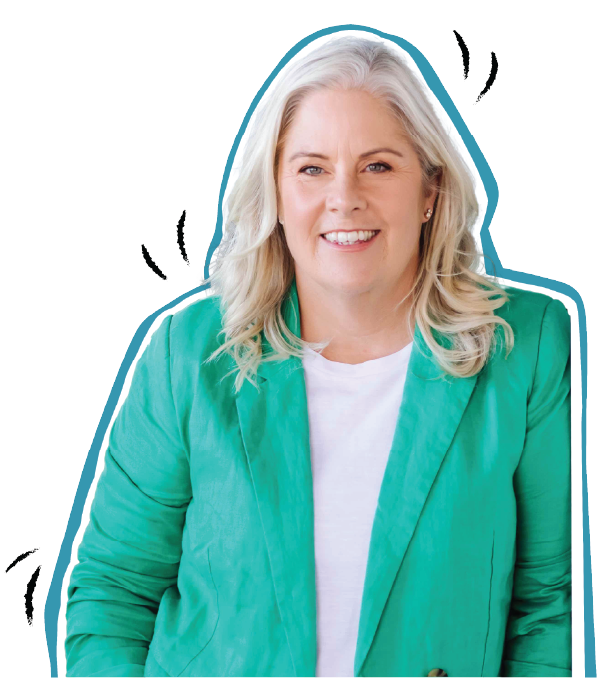
Elise Hedley-Dale has been shaking up the media world since the 90’s (exact year, not to be disclosed!). With nearly three decades of experience, she’s gone from media planner to business owner. Elise is the Founder of Media Words, a company born from the request of a loyal client – Ocean Spray.
This episode discusses how media consumption has transformed over the years from traditional TV spots and glossy magazines to the wild (and rapidly evolving) world of digital media. While some brands are quick to chase the next big thing and jump on the latest trends, it doesn’t mean you should throw out the playbook and follow suit. Elise emphasises that knowing your audience like the back of your hand is the key to creating a successful campaign. Elise reminds us of the fundamentals —understanding who your audience is, where they are, and how they want to be spoken to.
Elise and Marie discuss the power of adding a touch of humour and creativity into campaigns, from the viral ‘poo at work’ campaign (yes, you read that correctly) by Queensland Health to the clever ‘Love a Duck campaign. Elise stresses the power of simplicity and wit in creative messaging, and how a well placed billboard can still pack a punch.
Topic highlights:
Introduction of Elise Hedley Dale and her media journey (00:00:03)
Marie introduces Elise, highlighting her extensive experience in the media industry. Elise shares her beginnings in the media industry and the establishment of her agency.
Long-Term Partnership with Ocean Spray (00:03:15)
Elise discusses her enduring relationship with Ocean Spray, emphasising their collaborative growth.
Consumer Media Consumption Trends (00:05:28)
Elise highlights the importance of understanding audience behaviour amidst media hype.
Fundamentals of Media (00:06:17)
Elise stresses the need to focus on understanding and your audience over trends.
Managing Expectations in Media (00:07:04)
Elise discusses the challenges of aligning client expectations with media strategies.
The Role of Digital Media (00:08:14)
Elise outlines the significance of digital media and its various forms.
Quality Over Quantity in Media Reach (00:09:00)
Elise emphasises the importance of targeting the right audience rather than just focusing on impressions.
Discussion on Humour in Advertising (00:12:01)
Marie and Elise explore the role of humour in advertising and its potential impact.
Feedback as a Tool for Improvement (00:20:12)
Discussion on the importance of open feedback to enhance creative outcomes and client satisfaction.
Humour in Health Campaigns (00:27:15)
Highlights a Queensland health campaign using humour to address workplace taboos.
Commical – Episode title: The state of the Media
Published 11/10/2024 on Chasing Albert website, spotify and apple podcasts.
Marie 00:08
Hello to all of my Commical listeners out there. How are you? It's been forever and a day, I know, but I'm really excited today to bring you someone I've had the great pleasure of working with on and off for a very long time: Elise Headley Dale, who's the co-founder and director of Media Words, and she's been in the media game for a very long time. I'm scared to say the year 1995, I think she started. No? She's going, 'Just about.' She's going, 'No one needs to know.' But they absolutely need to know, because you are a powerhouse and one of the most outstanding players. So I'm very, very thrilled to have you here. Welcome, Elise.Guest 00:52
Thank you. What a lovely introduction. It's great to be here. I've been binging your podcast and just loving it, so it's great.Marie 01:01
I'm thrilled. I just remembered we also took a photo when we caught up in Melbourne. I was thinking, God, why didn't we talk about this in more detail when we were busy scoffing all of that amazing food?Guest 01:14
Beautiful lamb and those oysters, those gorgeous oysters. It's because we've always had stuff to talk about. I'm a rambler, so hopefully I don't ramble too much.Marie 01:25
No, there's no better guest on a podcast than someone who knows how to tell a story, which you do. And I want to hear a little bit about how you're going with Media Words. I know that Media Words isn't exactly new. You've had it for a while there, dipping in and out. And I think I worked with you when you had Media Words when we were working together on Ocean Spray. Is that right? Was that through Media Words or MediaCom?Guest 01:50
That was another business that I started when I went back to work after maternity leave having my daughter, Georgia. I couldn't get my job back because there was the economic crisis, or one of them, so everyone was really buttoning down. So I created an agency, or a media department, in a small creative agency, and all my clients followed me. So that was my first startup kind of little business, and it was great. It went well. But, you know, first business learning: having those tough conversations up front, putting structure into a business. I had none of that. So I brought in someone, and it all just went kaput. Then I started Media Words, and I started that at the request of the client that we both worked on, Ocean Spray. I was going to go back to a big agency, and they said, 'No, no, can you just start a business in some capacity so we can keep working with you?' So that was great.Marie 03:05
That's amazing. And worth noting that Ocean Spray still work with you, and that's a huge testament to you, Elise. Seriously.Guest 03:15
I think it's 23 or 24 years, minus the mat leave cover. So, yeah, it's been great. I've really grown with them. When I started working with them, I was just a media planner, which is not 'just', but I was brand new. And we only had three TV stations, and we booked so much TV and magazine. I spent my weeks just doing magazines. That's all I did. We used so many magazines. So yes, I've had to really evolve and change with them. I feel like I've grown up with them, so it's been great.Marie 03:51
And you're still doing amazing things. And for those who don't know Ocean Spray, how do you not know Ocean Spray, first of all? But just in case my mum is listening, it's the cranberry brand, effectively, and it's a cohort of farmers in the US, and they build these beautiful cranberry products, from their juices to their mixes to their Craisins, and they're the biggest player in the market, right?Guest 04:19
Yeah, and I was lucky. Last year, I got to go to the States twice for work, to the bog.Marie 04:28
Did you see a bog?Guest 04:30
Yes, I went to a bog. Finally. Oh my gosh.Marie 04:33
What's a bog? I mean, I hear bog and my head goes to crazy places. Can you tell us what a bog is?Guest 04:36
Marie, I was such a dag. I was taking so many photos. I had the big overalls with the high boots, asking all the questions. I had a ball, and I just want to go back. It's absolutely beautiful. But it's a great business and, because it's family-owned, owned by the farmers, three generations, it feels like you're giving something back. It's not just a big corporation.Marie 05:09
Yeah, and it's amazing, because what they've done with that brand is phenomenal. You've worked with them, and many other brands, for a really long time. What have you seen evolve, and what are the consumer media-consumption trends right now?Guest 05:28
You know, it's a really interesting question, because I feel like it always depends on your audience. And there's so much hype. People build things up and talk about it, and there's always a new thing. I don't know, people are still going on about TikTok - 'Oh my God, it's amazing' - but it's only such a small audience. I mean, yes, it reaches a lot of people, but when you drill it back down to your audience, your trends always... It's very easy to just jump to one thing or want the new shiny thing. But I always think the fundamentals of media have not changed, and we've really got to remember that.Marie 06:14
And what are they? What are those fundamentals?Guest 06:17
It's your audience. Who is the actual audience? Let's not do a spray-and-pray job. I think it's so important to understand your audience - who they are, where they shop, how they think, whether they've got kids - because it all ladders up. I think really aligning on your KPIs is important because people want everything. They want brand awareness, but they also want performance, which is 100% fine, and you can do both. But I think we have different tactics, or we might use different media, or engage different messages. And I think that suddenly ladders back to expectations - managing expectations is a huge part of the job because people come with different-size budgets. We're all media experts, aren't we? We all consume it in our own particular way, and your uncle will tell you this, your mate will tell you something, but at the end of the day, it's your data.Marie 07:27
So true. Let the data do the talking, I think.Guest 07:31
You know, trends... But really, I mean, digital media, obviously - it's no surprise. It's here to stay. I think streaming is a big thing. Social media platforms. Podcasts - I mean, there's just so many podcasts. We know mobile consumption is still huge, and I always hate being on my mobile, but I'm always there. Gaming - it'll be interesting to see what's happened with gaming. That's a big cohort for male audiences. But again, it's all about your audience. And I think also, when we talk about the fundamentals and planning, it's really important to go beyond the clicks or the impressions to understand the role of the media that you want to use. There's always a functional and an emotional role, because I think it's very easy to jump to the next thing or jump to the easiest thing. And if you think about the consumer journey, well, they're not just on social. They're not just on digital. But that's all everyone talks about.Marie 08:58
Social, yeah. Well, I think as well, social is so much easier... well, it's easier to measure, isn't it? And I think that's why a lot of clients like it, because they can see something, and that tangibility gives you comfort.Guest 09:13
100%. You can't click a billboard, but it doesn't mean it doesn't work. And people are so fixated on clicks and the data and the impressions, but that also rolls out to the question about, well, is your reach really the right reach? I always talk about a poor man buys twice. What is the point of getting a million impressions if only half of them reach your audience? So I feel like, yes, trends are really important, but it's also about laddering back to your audience and understanding quality over quantity.Marie 10:00
And it's not like you don't see any vacant billboards. They're all still fully booked. I've never driven past one and not seen something on it.Guest 10:08
Yeah, I love outdoor. I mean, again, I've got to try and take my buyer's hat off, but I think it's uncluttered. When you see a great... people take it into their subconscious mind. Just because you don't register something consciously, there's so much research behind that. I love reading all that because it's really interesting. But you're right: a clever billboard, or something that stands out when they've got the right creative in the right place, is powerful.Marie 10:41
100%. Like that Love a Duck campaign that we were recently talking about.Guest 10:44
Oh my God, I'm obsessed. It was so good. How clever. I think that really answered that barrier to buying duck. The creative was beautiful.Marie 10:59
What was the creative message again, just so that people listening can kind of envisage it? Let's describe it for them.Guest 11:04
'Give a duck.' It was all about the word duck, but they used it in the way that we might use the other word.Marie 11:13
'Fuck'? Are we allowed to swear on podcasts?Guest 11:16
100%.Marie 11:17
I take any opportunity. Why not?Guest 11:19
Well, I'm a swearer, so I'm right at home. But yeah, it was so clever, and I did this LinkedIn post about it because I just thought, you know what, hats off to Love a Duck and to the creative agency.Marie 11:32
Absolutely. So simple. This is the thing with simplicity. I think sometimes, even us, when we're working on our creative, you come up with something so simple but so perfect, and then you look at it and go, 'Oh, but it's so simple. Should it be more?' And often the answer is absolutely not. If it's simple, people get it. They get it quicker, particularly in out-of-home. What do they have, Elise? Three seconds? Two seconds?Guest 12:08
That's it.Marie 12:10
That's hard from a creative point of view sometimes. A client will want to get way more into that, and they're like, 'Can't we have a message about X?' I'm like, guys, you've got to remember someone's in their car driving past this. We've got three seconds. That's it, if we're lucky. So it's got to be beautiful, high impact and really simple. And in that LinkedIn post, it was interesting when we got on the topic of - and thank you, by the way, for asking me to contribute to your newsletter on this - should clients be more brave and be funny and attempt to be funny? Humour is amazing and gets you such great cut-through, but some clients just don't see themselves as that funny brand. But I think witty - being witty in an on-brand way - is really powerful.Guest 12:56
100%. But I also think for clients, they've got a lot of pressure. They've got to manage stakeholders.Marie 13:03
Sometimes they'll go for safe, right? Sometimes they'll go safe: 'I'm not going to ruffle feathers. It'll go up the chain really quickly. Everyone will approve it. I'll go with safe.'Guest 13:12
Isn't that the beauty of social or digital? Be a little bit risque, try a message out. I mean, yes, people will see it because we'll properly target and everything, but if something happens, you can take it down in like 10 minutes.Marie 13:27
It's a good testing ground. Social is a good testing ground, isn't it?Guest 13:31
But I also think there's a tendency to just try and cram too much into some ads because, I don't know, I suppose it's ticking a lot of boxes. But you see things like logos too small, and... which is why it's so important to ladder back to the experts - people like yourself - when you're doing creative, because not everyone's great at it.Marie 14:05
Absolutely. That's true. Or not everyone's brave enough to push back and go, 'Guys, I think you're making a mistake.' What do you think about the relationship between creative and media? Have you ever had those scenarios where something hasn't worked and you've gone, 'Creative's fault'?Guest 14:24
100% of the time? Come on. Do you know, I think yes. And you know what? I always feel like media gets the bad rap. They go, 'Oh, well, that was a shit campaign. It didn't work.' And it's like, well, hang on. Was the creative messaging right? Was it impactful? Did it cut through? I don't know. What were the macro factors? Was your pricing right? But it's not just all about media. We have to work in that ecosystem. It's so important. And I always think the best campaigns are done when everyone is briefed at the same time and you look at that owned, earned and paid ecosystem. I think briefing should always be in person, and the key stakeholders - media, creative, social, organic, whoever - should be in that room, because it's the flyaway comments that make people go, 'Oh, hang on, I didn't know that,' or, 'Hey, that's a good idea.' Being collaborative, and then understanding the audience, I just think that's the best way.Marie 15:40
The audience is vital, isn't it? And I think media, you guys are in a really unique position because media agencies have access to the richest audience data. Honestly, I'm jealous, and we don't always see it, by the way. Sometimes we just go, 'Hey, we need a creative about X and we need Y,' and you don't really get that full picture. One of the things I love about you is that you're so focused on that audience strategy - who they are, what they do, what to consider - that it helps a creative.Guest 16:13
And I think that, back in the day, years ago, when we all had time to be properly trained and we had a good amount of time to turn around strategies and do the audience work, we would sit there and we'd trawl. We'd spend days on Roy Morgan and build audiences, and then reconstruct them and really test them. So you're right, it's just so important to get that right. And I think often, when I get briefed, people just go, 'I just want to be on social or digital.' I always go, 'Hold on, let's step back and look at where your competitors aren't.' If everyone's on digital and no one's on, okay, random example, cinema, but your audience is going to cinema, why not go there and own that space?Marie 17:07
Stand out, do something different, yeah.Guest 17:10
I just think there are missed opportunities. But again, that research is key, and I think people should be more open in sharing. People do hold things to themselves, don't you think?Marie 17:37
I think it is, Elise. Our industry, marketing, is so fragmented now, right? And you get agencies trying to do everything, or wanting to own the strategy or own the direction, that therefore they feel like the more people I let in, the more of that I have to relinquish. But also, as someone working on this stuff day to day, sometimes the more people you involve, the more shit drags on, the harder it is to get to a decision. So I think there's so much of that at play. It's tricky. Navigating it is tricky.Guest 18:13
Yeah, look, I don't think there's ever a perfect rule or process for anything, is there? It's just being able to be flexible and flip and flop because you just never know. But going back to guarding your territory, I just think it's so important to work collaboratively and be open to suggestions. A lot of times I work with clients and I don't do the digital, but I'll go, 'Hey, I'm happy to step into the digital meetings and tell them about the audience or suggest stuff.' I don't need their work. Isn't it better that we all work together?Marie 18:55
Yeah, but I think that would be threatening to some. And maybe from that digital agency's perspective, maybe you come up with something they think they should have come up with, and it looks shit on them. Do you know what I mean?Guest 19:09
Yeah, true. And I suppose that goes back to what I was originally going to say before I went rogue, which is having that network you really need - where you're close, you're trusted.Marie 19:23
Yeah. This is why I really love working with close partners because, say, for example, with you, I would be so comfortable being vulnerable. I mean, to be honest, I'm one of those people - I'm vulnerable 24/7. I'm pushing myself out there. And I'm confident enough in my own abilities that if someone comes up with something, I'll go, 'You know what? That's actually really cool.' I'm alright with that. But I think the thing is, when you're working with people that you know and trust, if you were presenting something and I felt something was wrong or right, I'd feel so okay, without giving it a thought, saying to you in private, 'Elise, I don't know about this,' or, 'Maybe we do more with that.' But maybe if you were new, I wouldn't.Guest 20:12
Yeah, I think there's a delicate line. But I encourage feedback. I mean, it's sometimes a really hard pill to take, but give it to me. Just tell me. Because if I can tweak it and improve and get a better result...Marie 20:25
That's it - get a good result for that client. Because if you think hearing feedback is awkward, wait till you're faced with shit results and you have to explain why. Or you lose it. Absolutely. Raise it early.Guest 20:40
And I think sometimes, especially when you're in the zone and you're putting a presentation together or you're doing a meeting, you can be a bit blinded. You're just down that one lane, and people that you know aren't going to put you in the shit or steal stuff from you...Marie 20:57
No. I think once you've been around for as long as we have, for me those insecurities don't... I don't worry about that stuff. I've been around long enough to know that's really just part of the noise in your brain, those invalid thoughts. You have a million thoughts a day, and for me that's one thought that you just dismiss.Guest 21:25
Yeah, and I suppose I don't worry about it, but it just annoys me. I just think, really? Anyway, but that's a whole other session.Marie 21:34
A whole other one. I know. I've got one planned called Good Client, Shit Client, but I'll come to that. Or Good Work, Bad Work. Tell me about B2B. It's always a fascinating one for me: reaching business owners or business decision-makers. Have you seen or done any work in that space, and what's working?Guest 21:52
I think it's a really interesting one because, immediately, you just go, 'Well, LinkedIn. Everyone's on LinkedIn.' But some people aren't, and it's very expensive and whatever, but it does get results. But I think also remembering that these people are consumers as well.Marie 22:14
Yeah, they consume media like anyone else. That's true.Guest 22:17
But I think the messaging needs to be careful there, because you don't want to be jarring. But I also think organic posting on LinkedIn and thought leadership is really important there.Marie 22:34
Yeah. Well, I'm finding with LinkedIn at the moment, the organic stuff... I've stopped posting myself, to be honest, and I find now when I do have something to say, it goes nowhere because you've got to constantly be feeding that system in order for you to appear in feeds and stuff. But with the advent of ChatGPT and just how heavily it's used now, I find the good, authentic posts few and far between.Guest 23:03
Yeah, I agree with that. And it can be heart-wrenching when you put your heart and soul into a post and then you get nothing.Marie 23:12
That's me on TikTok.Guest 23:15
Oh my God, I'm not even on TikTok. That's so brave. Actually, I did a campaign, I had to do a campaign for someone, and it was influencer outreach, which we do a lot of in the recipe category. But I said, 'Yeah, we can do that.' Oh my God, TikTok - what is that like, honestly? I couldn't get the lip-syncing...Marie 23:39
Listen, you get some amazing influencers on TikTok, but it's a very difficult platform, to be honest. Content creators have a tough gig, mate. It's not easy.Guest 23:50
Okay, I'll leave it and follow you.Marie 23:53
Oh no, don't do that. Please run for the hills. I'm awful. But my goal on TikTok is to become a K-drama reviewer. That's it. Guess how that's going. Because I've had zero time. It's so hard to find the time and come up with good content and then post regularly enough. It's a beast you've got to feed constantly anyway.Guest 24:22
But isn't that the same with all organic content? I mean, I started my Media Words Instagram three weeks ago. I've got two posts, and I'm like, 'I've got to get to that,' because there's always something more. There's always something. And I'm thinking, should I outsource it?Marie 24:35
The life of a business owner, right? Wearing all those millions of hats. It's so hard. You throw yourself into it for your clients, and you deliver, and then for yourself, you're like, 'Oh, really? Must I?'Guest 24:48
So true, isn't it? Why is that? I mean, I suppose you're there for your clients.Marie 24:55
And you've got a family, and you've got 100 other things, and you're like, 'Yeah, you know what? I'll give the rest of me.' Have there been... I mean, we talked about Love a Duck. Has there been any other campaign or creative out there that you've gone, 'Shit, that's really cool'?Guest 25:09
I really liked the July suitcase campaign they did. I thought that was really clever. Did you see that?Marie 25:16
No.Guest 25:17
They hooked up with the Olympic... I suppose they were the official bag sponsor, but they did a launch and I think it was just on my algorithm - LinkedIn had just given it to me - but I thought they did a really clever job with that because it was really leaning into that cultural moment and taking advantage of the interest. And also, contextually or environmentally, it was spot on. I thought that was really clever. The Ocean Spray campaign I did last February... I feel like February this year was last year. It's just such a mingle. But we did a really successful out-of-home campaign, and the creative guys from The Reactor did a great job, and we took all our learnings from that. I think we've got a bus zooming around Sydney, so hopefully you'll see that, and we've got some large-format digital and some small formats, and we've got a lot of social and normal digital. So I think that creative's really... and I know I'm biased, but I think that's great. I think it's just simple, straight to the point. We're working on our new February campaign, and we're definitely again taking our learnings and injecting some humour. So I'm really looking forward to that one. But yeah, hopefully hunt it down. Tell me what you think. I think it's really clever.Marie 27:04
Send it to me. I'd love to see it, and I'll keep an eye out for it. One campaign that recently came out that I've absolutely loved is from Queensland Health. I don't know if you've seen it, but the one that's trying to normalise pooing at work. 'Poo at work. It's okay to poo at work.' It's been on social, PR... honestly, this is prime PR material. It would have been everywhere. It's been brilliant. And it started, I think, on social, where they had the rainbow, dolphins and the unicorn, and it just said, 'It's okay to poo at work,' and heart emoji, poo emoji, and then other posts like, 'Poo at work. Discuss.' The whole goal behind it is to encourage people and say you have to - it's unhealthy to hold it in. And it's just sparked such a massive conversation around it. It's so true, because some people do have a phobia of doing number two at work. I just thought it was absolutely brilliant and such a great example, again, of using humour to talk about something that they so could have gone down the route of a very medical health and wellbeing campaign that would have been overlooked, would not have had the same impact. And this one's just like, 'It's okay to poo at work.' That's it. That's how simple it is.Guest 28:31
I'm definitely going to look that up. And when I was talking before about the subconscious mind, I don't think I've seen the campaign, but I'm pretty sure I was listening to the radio, or maybe it was The Project, I don't know, and they were talking about pooing at work. And I was like, wow, that's an interesting conversation. But obviously that's the PR part of it.Marie 28:57
Yeah, it's been everywhere. Good work. Hats off. Well played, Queensland Health. Well played. Amazing.Guest 29:04
That's great. And we're talking about it, and now I'm going to go and talk about it tonight with my family.Marie 29:09
And tomorrow I'm going to poo at work. No, I'm joking. I will. I probably will. Let's be real. You do what you got to do. Tell me, are you happy being a business owner now and wearing every hat that comes with it?Guest 29:26
Yeah, 100%. When I started Media Words, I think it was eight years ago, I was contracting through the Dentsu network, as you knew. And I did that for cash flow, and also I just had... I love big agency, but in the end it was just frustrating, and I was sick of being told off.Marie 29:47
Why were you being... what were you doing, woman?Guest 29:51
Because I'm like, 'No, I want to do this.' I've always been more client than agency. So when they say to me, 'You have to buy media with this particular publisher because we've got a deal,' I'd go, 'Well, no, because that doesn't work for me.' And yeah, so I just wouldn't do it. But I was also there because I was working with the team at Sonos, and they requested that I was working on their team, so I did have a bit of leniency. I was sort of like, 'You know, I don't care.' But I love working for myself because, I mean, there's moments of total despair where you just go, 'Oh my God, should I do something else?'Marie 30:28
Yeah, yeah. So hard, isn't it? There's just highs and lows.Guest 30:31
I just love that you're constantly learning. And I think the support there is amazing when you reach out to your network. The support is everything. I love podcasts; I always reach out to people when I hear a good one. And it's amazing that people just get back to you and you meet amazing people. I just don't think that would happen to me if I was still in a big agency. But yeah, it's definitely highs and lows. And it's funny - you can start the morning and it's like, 'Wow, this is great,' and then in the afternoon you're like, 'Oh God, give me wine.'Marie 31:23
Yeah, honestly, it's not for the faint-hearted. It is definitely not for the faint-hearted.Guest 31:31
And I think they should teach business in schools, because I knew nothing about cash flow.Marie 31:38
I think they do teach business in schools, but people like me preferred drama and lunch breaks. Drama and lunch breaks. I'm sure there was some kind of business and economics class that I did not sign up for.Guest 31:53
Yeah, because it was probably better than doing something at the tuck shop.Marie 31:56
100%. It was shepherd's pie. The line was long. Who had time for business lessons, you know?Guest 32:03
But yeah, I think it's good. I think it's great. I love it. And when you fuck up and make a mistake, it can be tough, but you learn from it, don't you?Marie 32:14
You absolutely do. And you know what? You'll do great. You're someone who's really smart and very easy to work with, and a straight shooter. So well done to you, and good luck with it.Guest 32:24
Thank you. I'm starting to work on my personal brand, because apparently that's important. So yeah, thank you. I'm going to be out everywhere, hopefully.Marie 32:36
Go, you. Go, you. Thank you so much for coming on, Elise. I've loved chatting with you.Guest 32:43
Thank you for having me.Marie 32:45
Stay around. Have fun in Europe.
About Elise Hedley-Dale, Founder of Media Words
With nearly three decades of experience in Media across the ANZ and Global Markets, Elise Hedley has worked with some of the biggest agencies, A-list clients, and household brands large and small. Her career highlights include leading the Sonos Global Media teams across North America, EMEA, and APAC, driving media strategies and campaigns on global scale which contributed to Sonos’ market presence. Elise has worked with Ocean Spray for over 23 years (since 2001), managing their media strategy, planning and buying – building a strong partnership that led to a personal visit to an Ocean Spray harvest. Driven by a passion for demystifying the media landscape, Elise founded Media Words with a clear mission: to provide businesses of all sizes with the strategic insights and planning expertise typically reserved for large brands.